
Platforms - Rolling Scaffold
On this page
What should you do when using a rolling scaffold?
Back to top- Make sure that you are trained properly to erect and use a rolling scaffold.
- Assemble the rolling scaffold according to manufacturer's instructions.
- Inspect the rolling scaffold before each use and after any modifications.
- Make sure that the surface on which the scaffold is moved is level and without holes or obstructions.
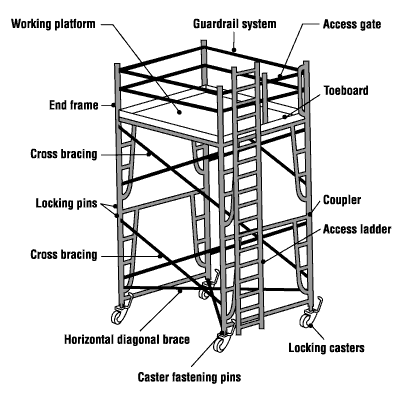
- Brace all rolling scaffolds horizontally and diagonally.
- Cleat or secure all planks.
- Prevent joints from separating.
- Provide workers with a safe method to access and exit from the scaffold.
- Secure access ladders.
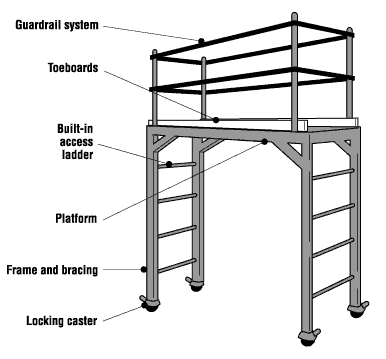
- Make sure the platform has appropriate guardrails (hand, mid, toe).
- Ensure that each wheel or castor is equipped with brakes to prevent rolling and swivelling.
- Lock the caster brakes before climbing onto the scaffold.
- Secure or remove all material, equipment and personnel from the platform before moving it.
- Push towards the base when moving.
- Use the built-in access ladders to reach the platform.
- Increase the scaffold’s base dimension(s) by installing outriggers.
- Refer to occupational health and safety regulations in your jurisdiction for height stability requirements.
- Refer to occupational health and safety regulations in your jurisdiction to determine when fall arrest systems may be necessary (e.g., when working at a certain height, accessing or exiting the scaffold, or when guardrails are not present). If fall arrest systems are necessary, workers must be appropriately trained before use.
What should you not do when using a rolling scaffold?
Back to top- Do not stay on the scaffold when it is being moved, or try to move it yourself while on it. If a worker must remain on the scaffold, make sure the worker is secured to the building (not the scaffold) with appropriate fall protection equipment (e.g., safety harness and lanyard).
- Do not try to move a rolling scaffold without enough help. Watch out for slopes, holes, debris, and overhead obstructions.
- Do not use a rolling or mobile scaffold with pneumatic tires as the only support while used, erected or dismantled.
- Do not extend adjusting screws more than the manufacturer recommends.
- Do not allow the working platform height to exceed three times the base width unless it is guyed and equipped with outriggers or otherwise stabilized.
- Do not use powered devices to move scaffolds.
- Do not lean access ladders against rolling scaffolds.
- Do not over-reach from the scaffold.
- Do not climb using the frame.
- Do not stand on guardrails.
- Do not overload the scaffold.
- Fact sheet confirmed current: 2024-10-04
- Fact sheet last revised: 2018-02-05