
Metalworking Machines - Milling Machines
On this page
What should you know before using a milling machine?
Back to topMilling machines can be dangerous if not used properly.
- Read the owner's manual carefully.
- Make sure you understand instructions and are properly trained before operating a milling machine.
Refer to Metalworking Machines - General for general safety tips.
What are some safe work principles to follow when using a milling machine?
Back to top- Wear appropriate CSA-certified safety glasses. Wear other personal protective equipment as necessary (such as footwear or hearing protection).
- Check the machine for damage before each use.
- Make sure all machines have a start/stop button within easy reach of the operator.
- Make sure that all machines have an emergency stop button (e-stop).
- Make sure that the work piece and cutter are mounted securely before taking a cut.
- Check that work is mounted squarely.
- Mount work in a vise or fixture that is bolted or held magnetically to the table. Use hand tools to make adjustments. Refer to Hand Tools for more information.
- Hold milling cutters with a cloth or wear gloves to avoid being cut when handling them.
- Move the table as far as possible from the cutter while setting up work to avoid injuring your hands.
- Mill the largest surface first.
- Keep hands, brushes and rags away from the revolving milling cutter.
- Use the machine's brake to stop the spindle after the power has been turned off.
- Use a vacuum, brush or rake to remove cuttings only after the cutters have stopped moving.
- Use the correct cutting fluids, and change cutting coolants or compounds as specified by the manufacturer.
- Keep cutters sharpened correctly and in good condition.
- Keep the working surface clear of scraps, tools and materials.
- Remove cutting tools from the spindle when cleaning the machine.
- Keep the floor around the milling machine free of oil and grease.
- Use lifting equipment when appropriate to move heavy work to or from milling machines. Refer to Materials Handling for more information.
- Make sure the power is off before changing the cutters.
- Always stay at the machine when it is in operation.
- Use lifting devices when moving heavy pieces.
Before starting the machine, what should you check?
Back to topBefore starting, make sure that:
- all guards are in place
- work is properly secured in place.
- bolts used to hold down work clear the tooling.
- tooling and supporting pieces are properly tightened in position.
- table stops are secured properly.
- handles on all feed screws are in neutral.
- the table is free of stock, tools or other loose material.
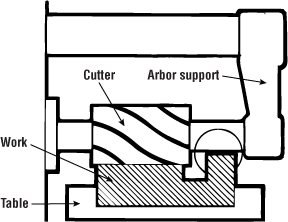
- the arbor and arbor support are clear of the work.
- the cutter is rotating in the right direction.
What should you consider when setting the cutting speed?
Back to topMake sure that the following factors are considered when setting the cutting speed:
- material to be machined
- type of cutter
- finish required
- depth of cut
- rigidity of the machine and work piece
What are some things you should avoid doing?
Back to top- Do not wear gloves, rings, watches or loose clothing. Tie back and confine long hair.
- Do not attempt to mount, measure or adjust work until the cutter is completely stopped.
- Do not use an excessively heavy cut or feed as it can cause the cutter to break. The flying pieces could cause serious injury.
- Do not reach over or near a revolving cutter. Keep hands at least 30 cm (12 in.) from a revolving cutter.
- Do not lean or rest your hands on a moving table.
- Do not make any adjustments while the machine is running.
- Do not use paper shims to check the distance from the cutter to the stock.
- Do not move the operating levers without knowing what they control and what action is going to take place.
- Do not leave the machine unattended while it is running.
- Fact sheet last revised: 2024-11-27