
Watch the videos
YouTube video: Use words everyone can understand.
[Transcript]
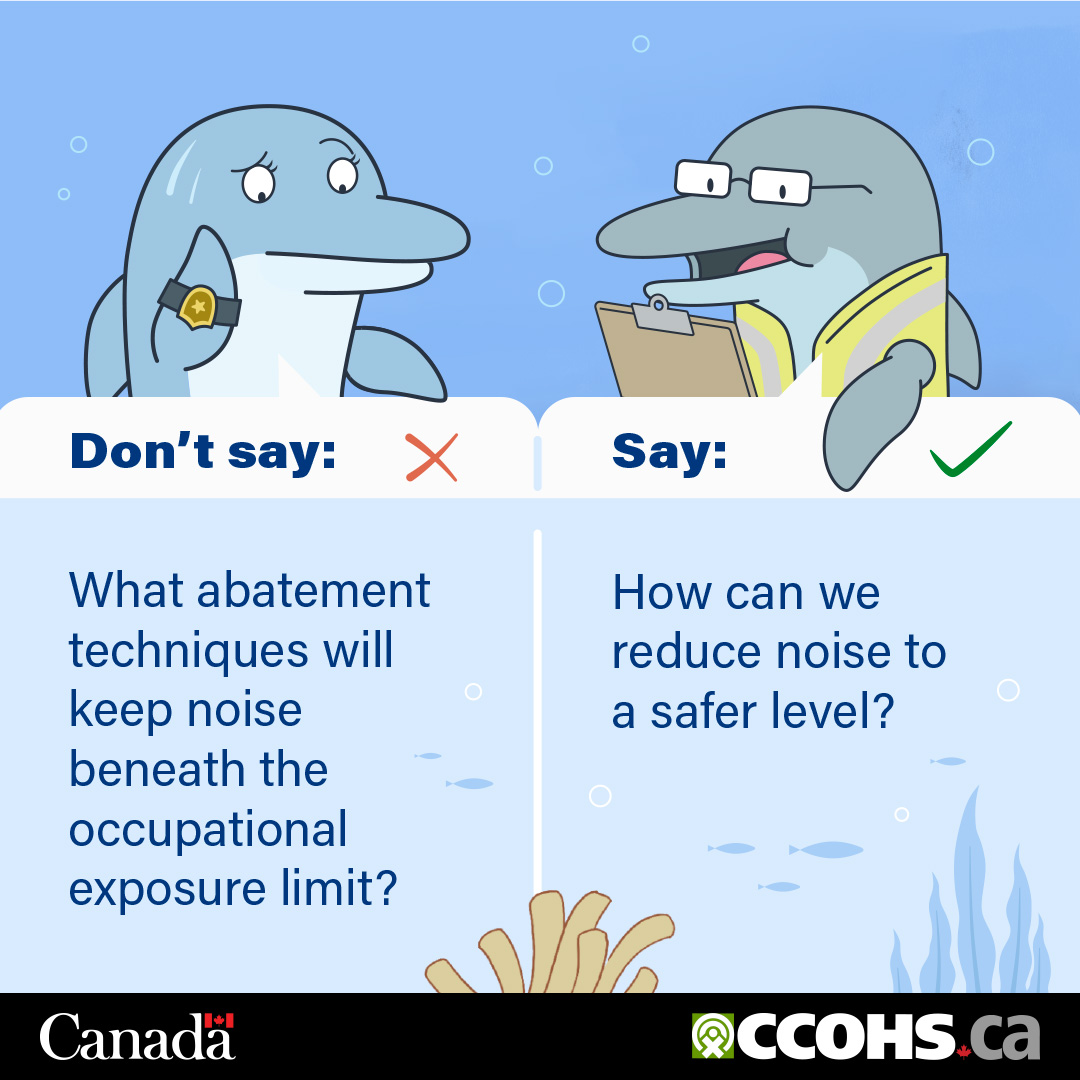
[Dolphin 1]: Recent IH sampling data indicates the ambient noise levels in our water are far exceeding the OEL, leading to increased physical discomfort and stress among the pod.
Deborah, can you suggest some noise abatement techniques to keep exposure beneath the OEL?
[Dolphin 2]: Um, OEL?
[Dolphin 1]: Occupational Exposure Limit. Yes.
[Dolphin 2]: Noise abatement?
[Dolphin 1]: Oh. I guess what I'm trying to say is, how can we reduce the noise around us to a safer level?
[Dolphin 2]: Oh, now I get it. Well, there's a lot of noise that seems to come from...
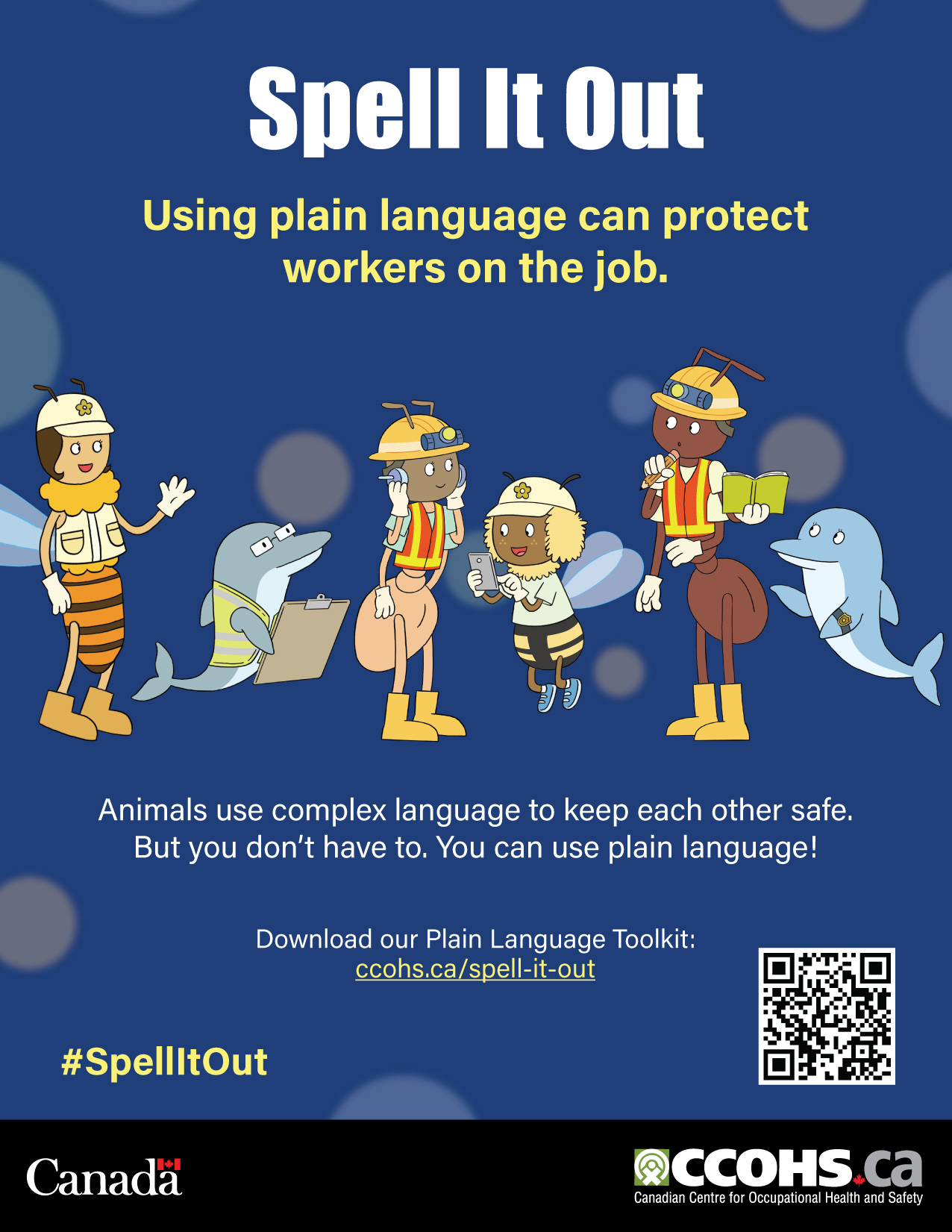
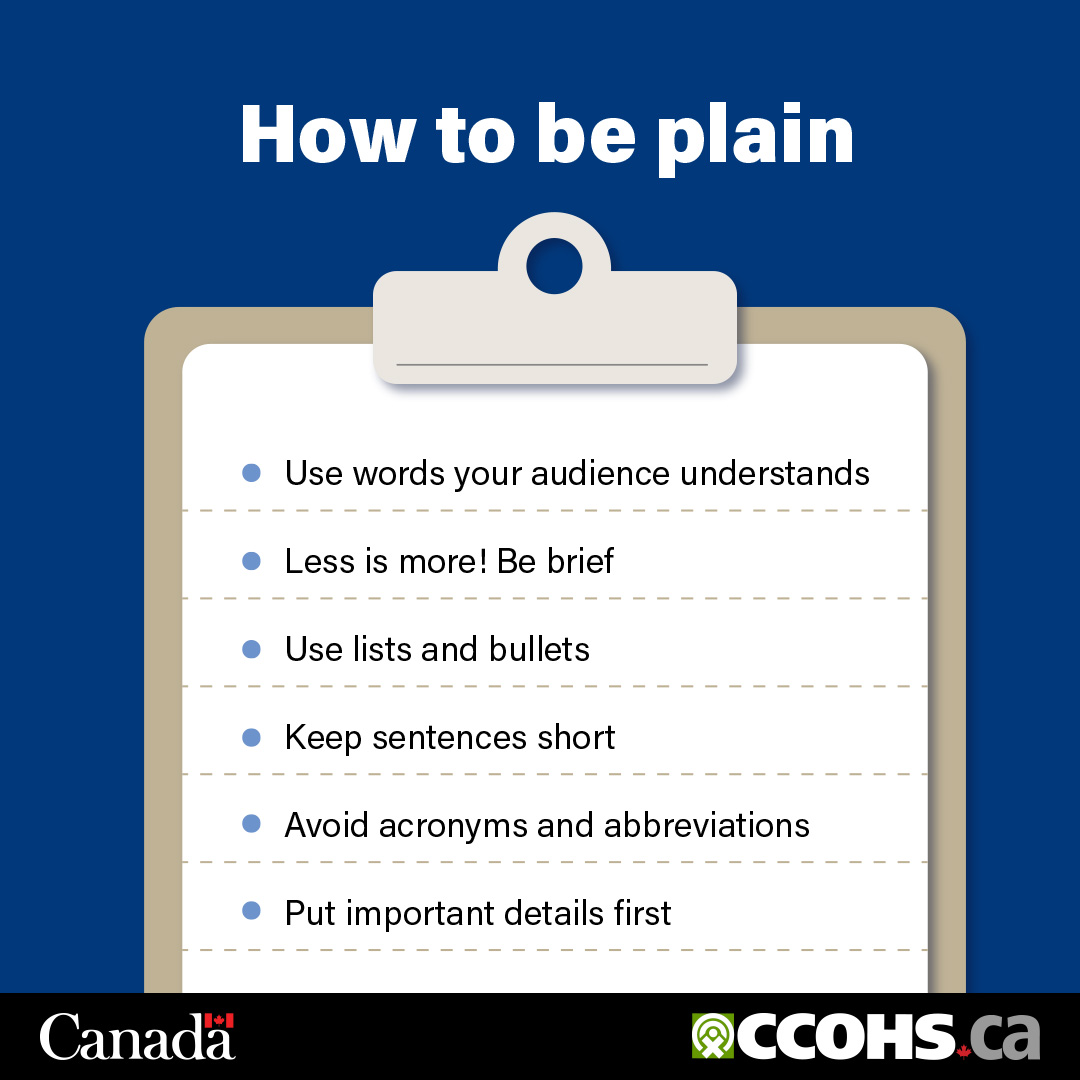
[Narrator]: Dolphins use complex language to keep each other safe at work. But you can use plain language everyone can understand.
YouTube video: Translate technical language
[Transcript]
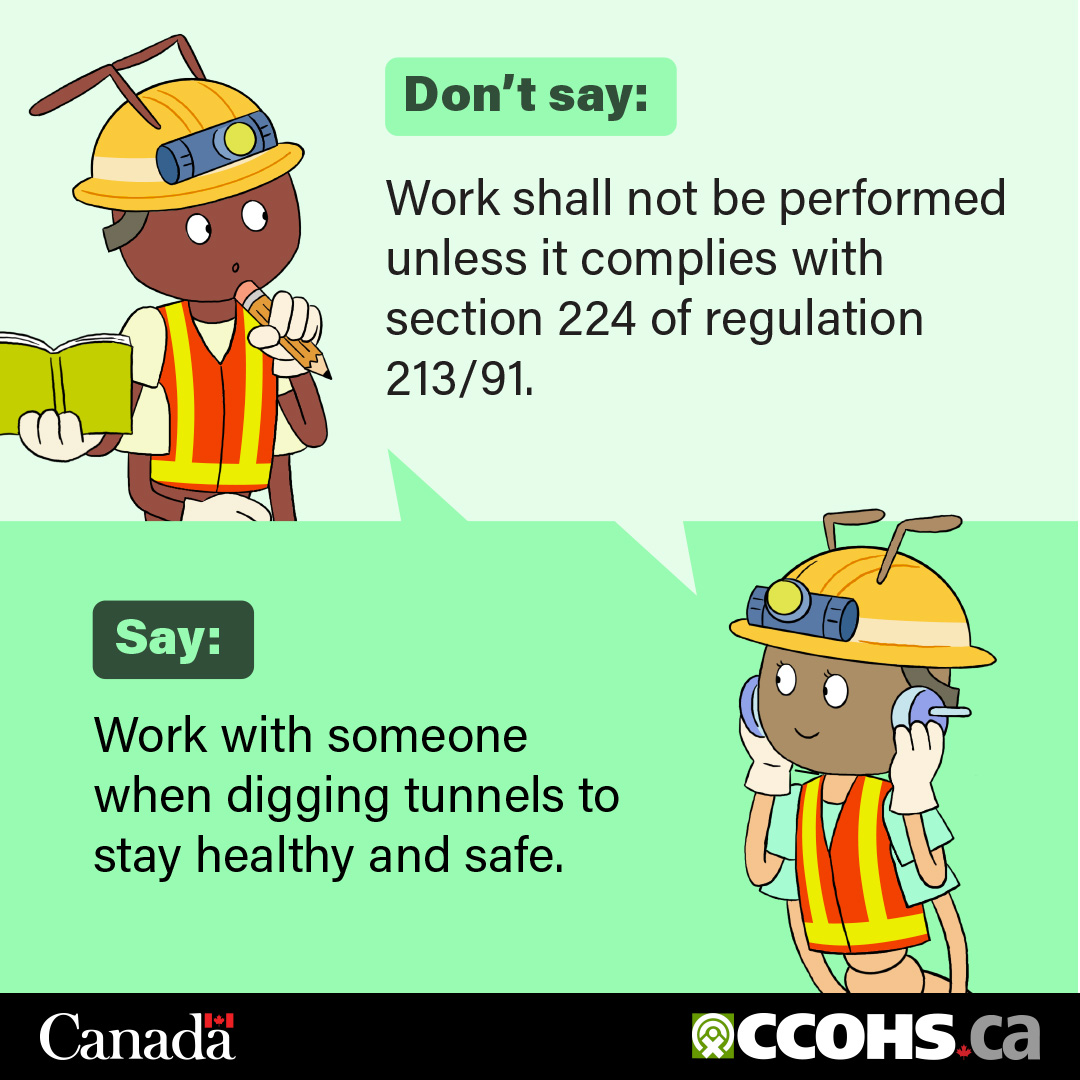
[Ant 1]: Hey, Angelo. Anything I need to know before digging out these tunnels?
[Ant 2]: No person shall enter or be permitted to enter an excavation that doesn't comply with regulation 213/91, section 224.
Work shall not be performed in a trench unless another worker is working above ground, in close proximity to the trench, or to the means of access to it.
I guess what I'm trying to say is we need to use the buddy system.
[Ant 1]: Why didn't you just say that in the first place?
Come on, let's dig.
[Narrator]: Ants use complex language like chemical signals to keep each other safe at work.
But you don't have to. You can use plain language.
YouTube video: Spell out abbreviations and acronyms.
[Transcript]
[Bee 1]: Welcome to the hive, Bob.
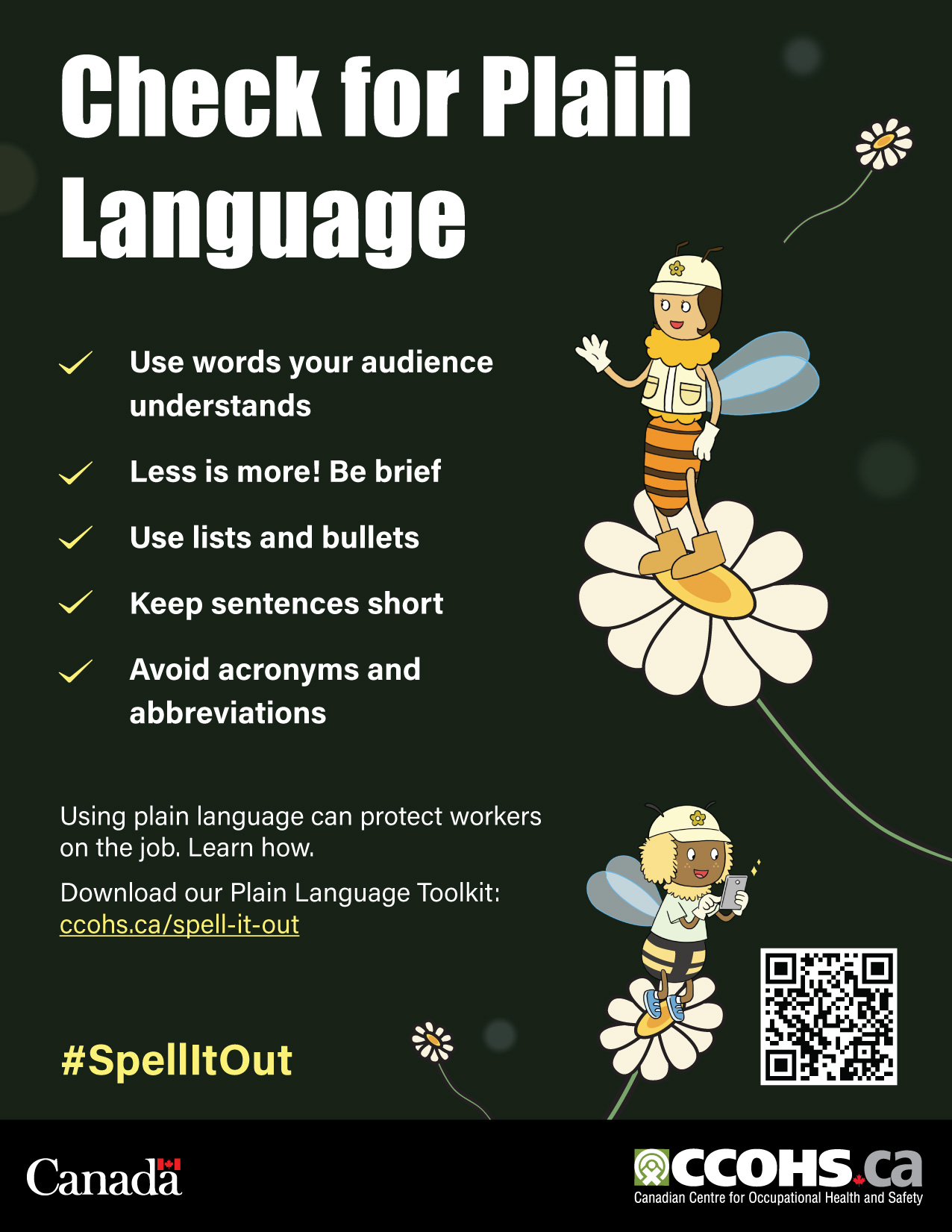
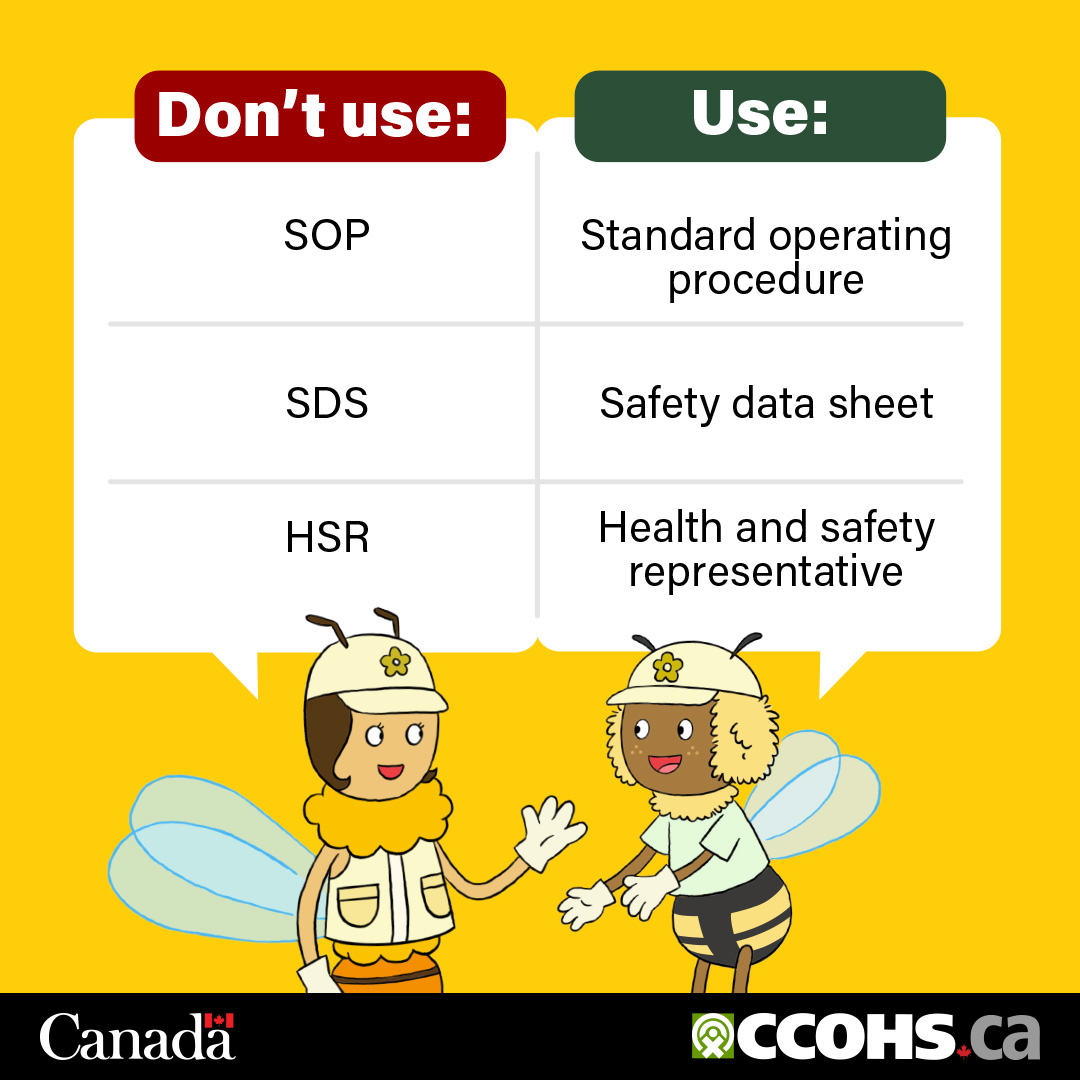
FYI, you'll need to read the SOP before getting on the production line.
[Bee 2]: SOP?
[Bee 1]: The hazard info is in the SDSs.
Your HSR can also help with any FAQs.
And don't forget to wear your PPE.
[Bee 2]: Huh?
[Bee 1]: I guess what I'm trying to say is you'll need health and safety training before you can start making honey.
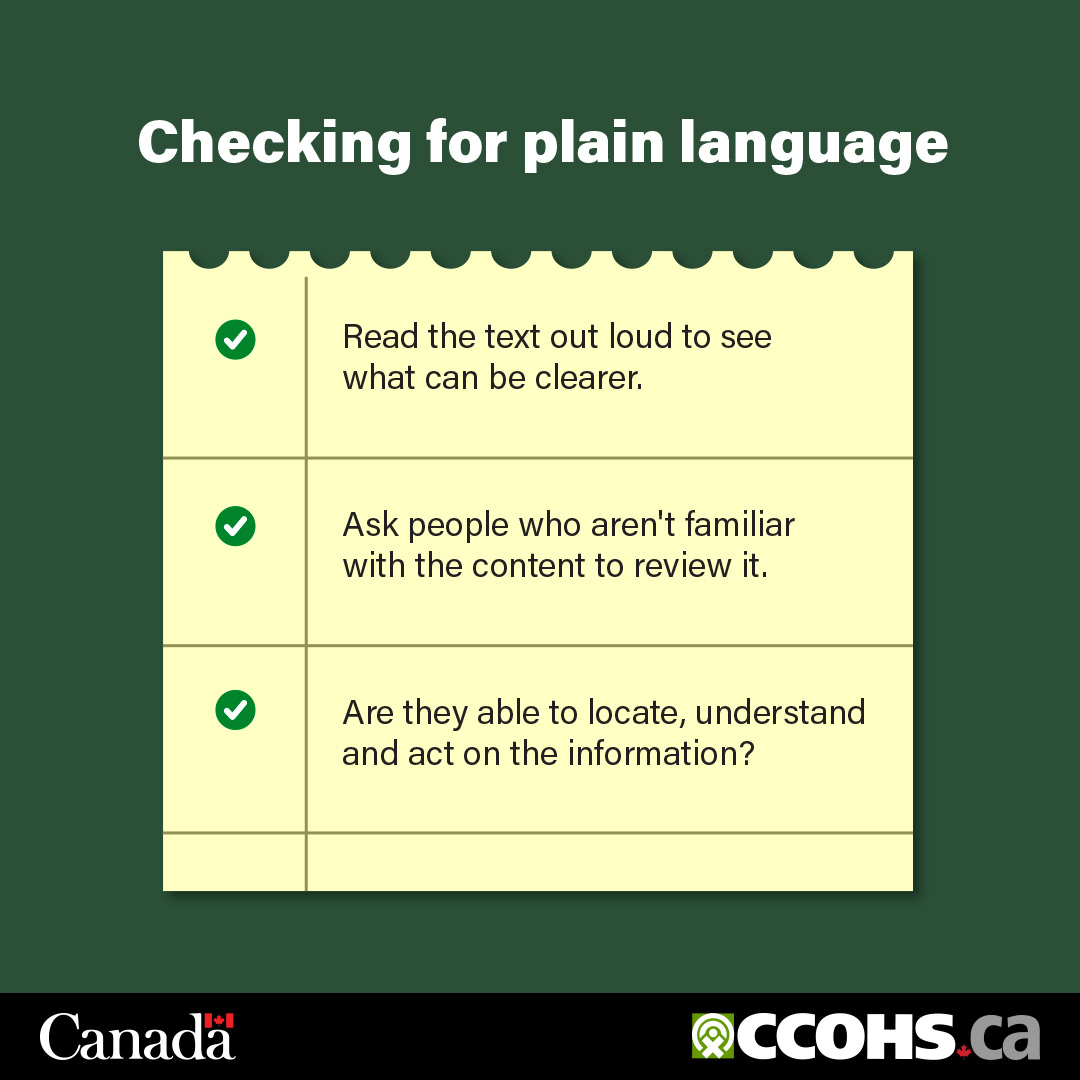
[Bee 2]: Okay, now it makes sense.
[Narrator]: Bees use complex language like vibrations to keep each other safe at work.
But you don't have to. You can use plain language.
YouTube video: Put your main message first.
[Transcript]
[Beaver 1]: The dam looks leaky. What can we use to seal it?
[Beaver 2]: That's a good question.
The pond around the dam is a safety zone that needs to be maintained for protection from predators. This zone also helps to bring in goods
like food and building materials...
[Beaver 1]: Right, about the building materials…
[Beaver 2]: Building a dam involves interlocking branches
and logs and weaving them together. Packing mud, rocks...
[Beaver 1]: Bucky! Hey, do you know what materials to use
to seal the dam?
[Beaver 3]: Sticks, twigs and mud Bernice… we’re on it.
[Beaver 2]: You see, the dam also creates a wetland...
[Beaver 3]: Let's get to work.
[Beaver 2]: ...other species to call their habitat, or home if you will… So, to answer your question… we’ve got a stockpile of sticks, twigs and mud. That should do the trick!
[Narrator]: Beavers use complex language, like tail slaps, to keep each other safe at work. But you don't have to! You can use plain language to put your main message first.