
Reducing the Risk of Occupational Cancer in Wildland Firefighters
[PNG, 593 KB]
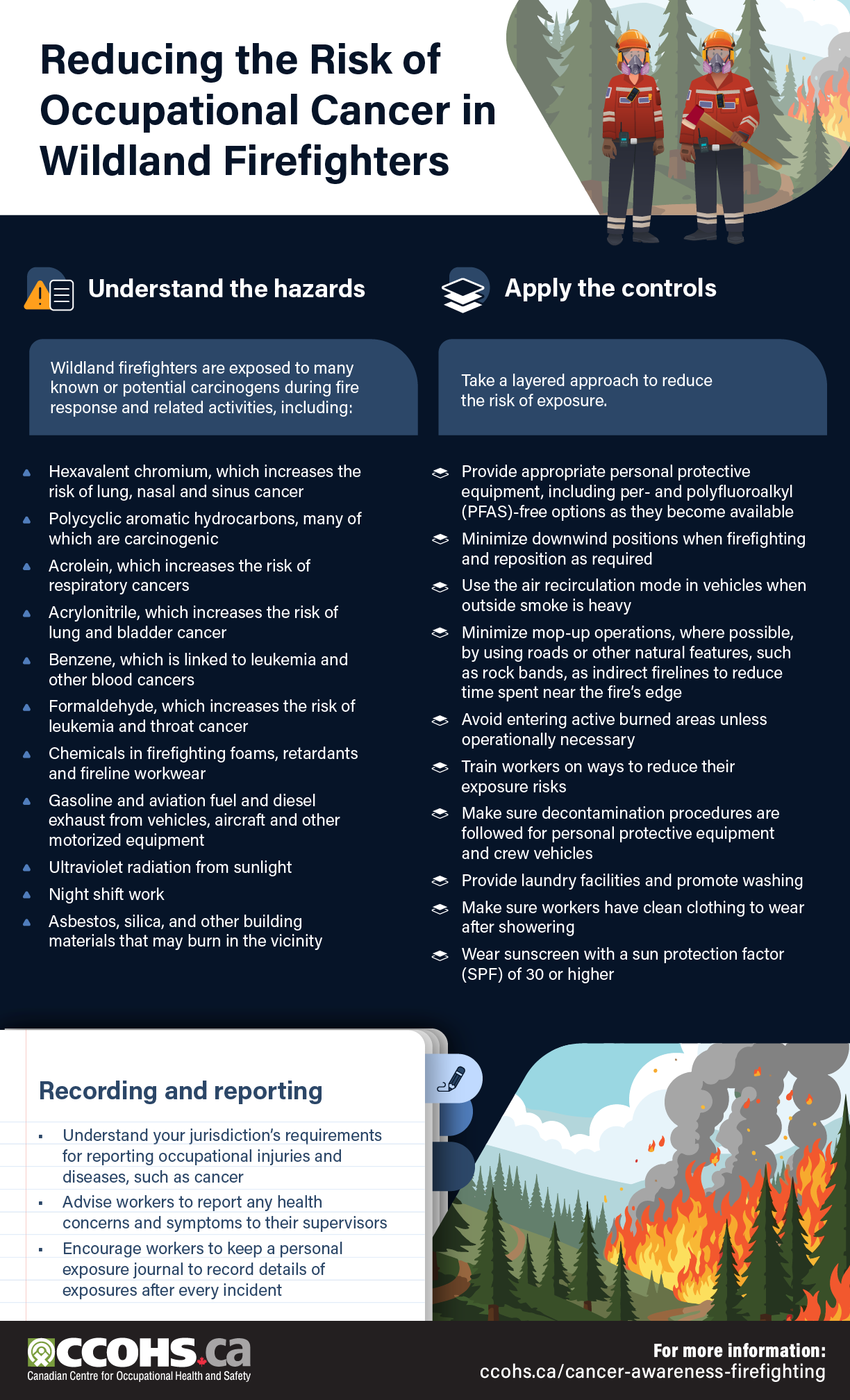
Description: Reducing the Risk of Occupational Cancer in Wildland Firefighters
Understand the hazards
Wildland firefighters are exposed to many known or potential carcinogens during fire response and related activities, including:
- Hexavalent chromium, which increases the risk of lung, nasal and sinus cancer
- Polycyclic aromatic hydrocarbons, many of which are carcinogenic
- Acrolein, which increases the risk of respiratory cancers
- Acrylonitrile, which increases the risk of lung and bladder cancer
- Benzene, which is linked to leukemia and other blood cancers
- Formaldehyde, which increases the risk of leukemia and throat cancer
- Chemicals in firefighting foams, retardants and fireline workwear
- Gasoline and aviation fuel and diesel exhaust from vehicles, aircraft and other motorized equipment
- Ultraviolet radiation from sunlight
- Night shift work
- Asbestos, silica, and other building materials that may burn in the vicinity
Apply the controls
Take a layered approach to reduce the risk of exposure.
- Provide appropriate personal protective equipment, including per- and polyfluoroalkyl (PFAS)-free options as they become available
- Minimize downwind positions when firefighting and reposition as required
- Use the air recirculation mode in vehicles when outside smoke is heavy
- Minimize mop-up operations, where possible, by using roads or other natural features, such as rock bands, as indirect firelines to reduce time spent near the fire’s edge
- Avoid entering active burned areas unless operationally necessary
- Train workers on ways to reduce their exposure risks
- Make sure decontamination procedures are followed for personal protective equipment and crew vehicles
- Provide laundry facilities and promote washing
- Make sure workers have clean clothing to wear after showering
- Wear sunscreen with a sun protection factor (SPF) of 30 or higher
Recording and reporting
- Understand your jurisdiction’s requirements for reporting occupational injuries and diseases, such as cancer
- Advise workers to report any health concerns and symptoms to their supervisors
- Encourage workers to keep a personal exposure journal to record details of exposures after every incident
For more information: ccohs.ca/cancer-awareness-firefighting
Document last updated on: 2026-03-17