
Personal Protective Equipment in the Fire Service
[PNG, 348 KB]
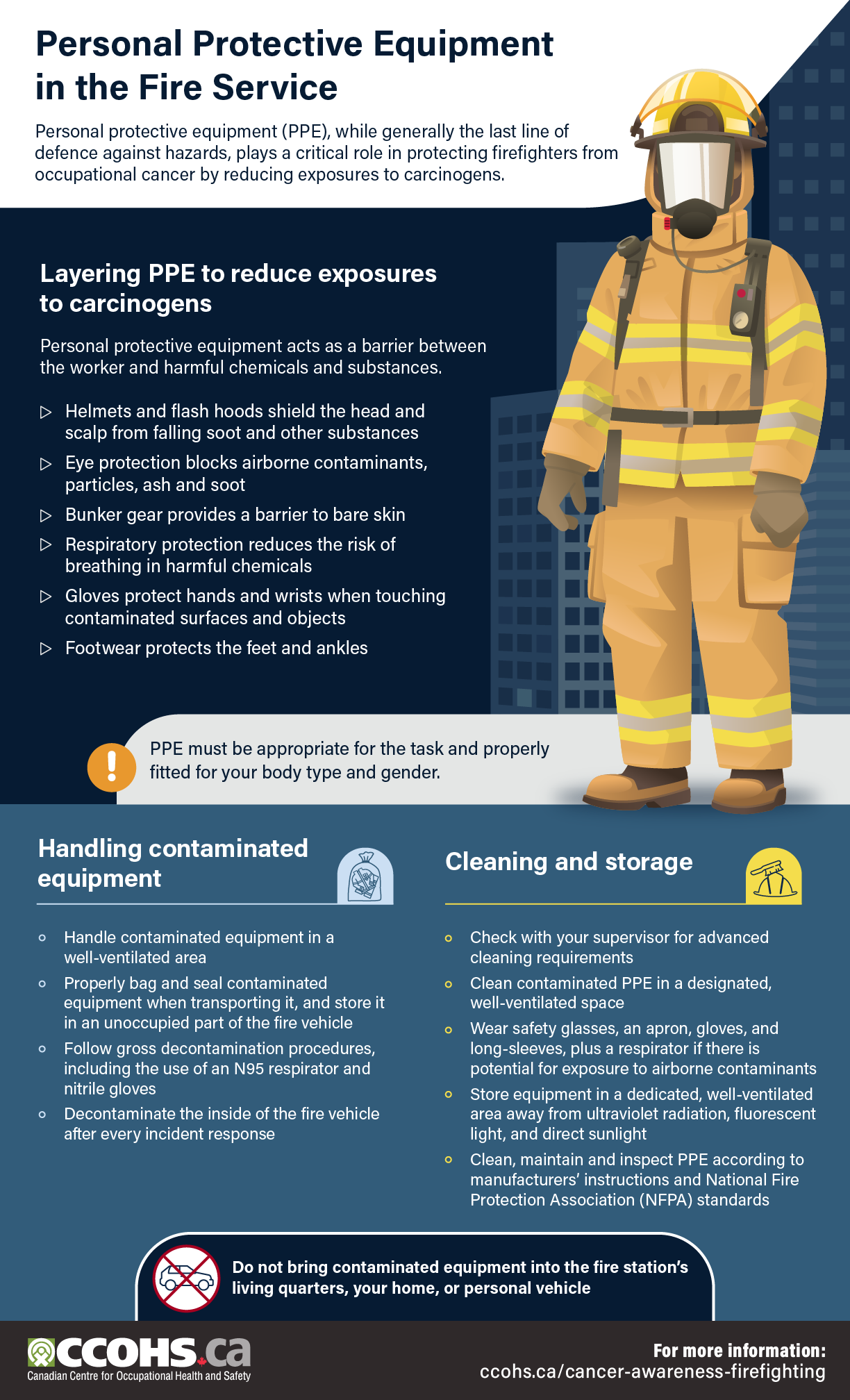
Description: Personal Protective Equipment in the Fire Service
Personal protective equipment (PPE), while generally the last line of defence against hazards, plays a critical role in protecting firefighters from occupational cancer by reducing exposures to carcinogens.
Layering PPE to reduce exposures to carcinogens
Personal protective equipment acts as a barrier between the worker and harmful chemicals and substances.
- Helmets and flash hoods shield the head and scalp from falling soot and other substances
- Eye protection blocks airborne contaminants, particles, ash and soot
- Bunker gear provides a barrier to bare skin
- Respiratory protection reduces the risk of breathing in harmful chemicals
- Gloves protect hands and wrists when touching contaminated surfaces and objects
- Footwear protects the feet and ankles
PPE must be appropriate for the task and properly fitted for your body type and gender.
Handling contaminated equipment
- Handle contaminated equipment in a well-ventilated area
- Properly bag and seal contaminated equipment when transporting it, and store it in an unoccupied part of the fire vehicle
- Follow gross decontamination procedures, including the use of an N95 respirator and nitrile gloves
- Decontaminate the inside of the fire vehicle after every incident response
Cleaning and storage
- Check with your supervisor for advanced cleaning requirements
- Clean contaminated PPE in a designated, well-ventilated space
- Wear safety glasses, an apron, gloves, and long-sleeves, plus a respirator if there is potential for exposure to airborne contaminants
- Store equipment in a dedicated, well-ventilated area away from ultraviolet radiation, fluorescent light, and direct sunlight
- Clean, maintain and inspect PPE according to manufacturers’ instructions and National Fire Protection Association (NFPA) standards
Do not bring contaminated equipment into the fire station’s living quarters, your home, or personal vehicle
For more information: ccohs.ca/cancer-awareness-firefighting
Document last updated on: 2026-03-17