
Occupational Cancer Awareness in the Fire Service
[PNG, 353 KB]
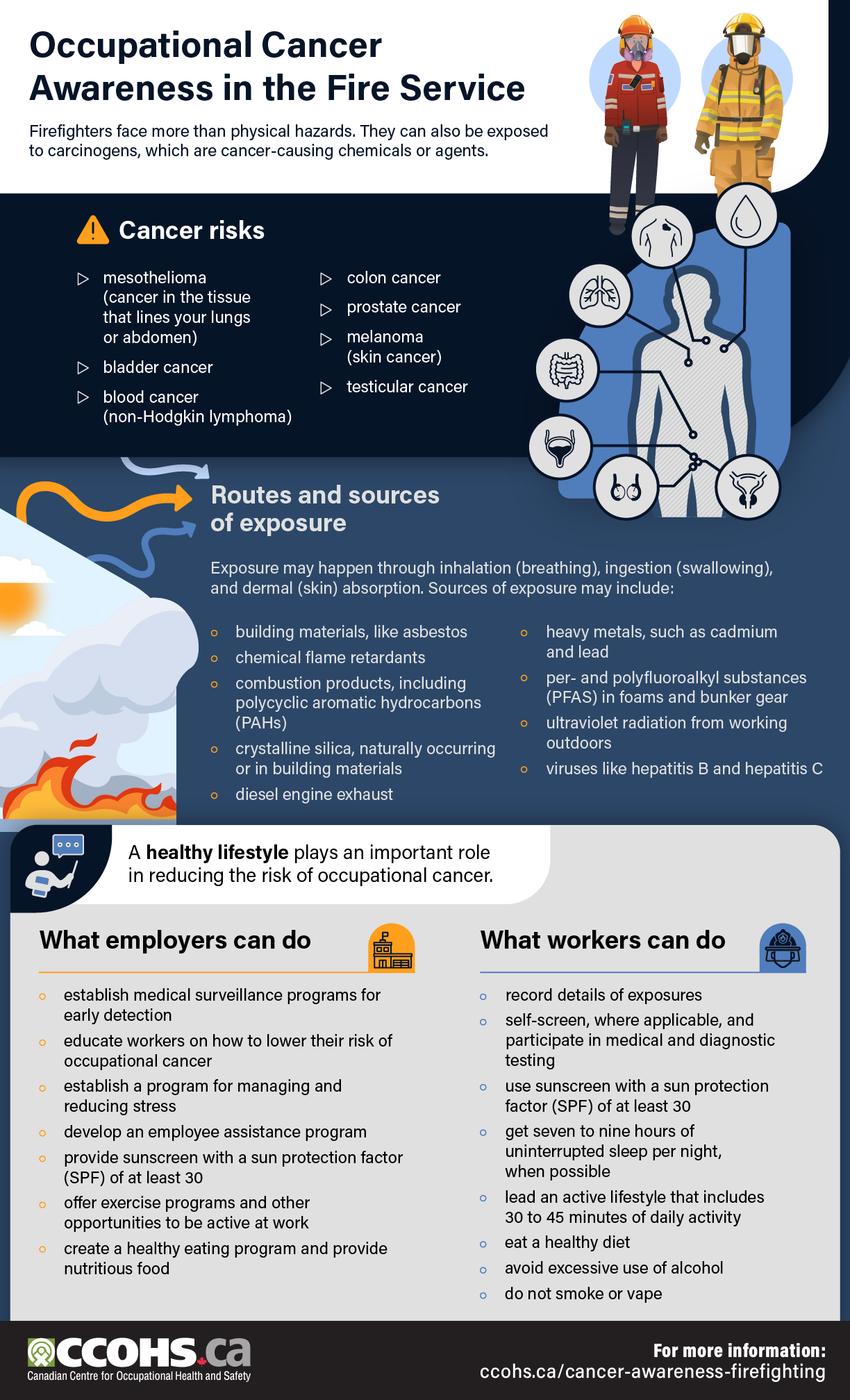
Description: Occupational Cancer Awareness in the Fire Service
Firefighters face more than physical hazards. They can also be exposed to carcinogens, which are cancer-causing chemicals or agents.
Cancer risks
- mesothelioma (cancer in the tissue that lines your lungs or abdomen)
- bladder cancer
- blood cancer (non-Hodgkin lymphoma)
- colon cancer
- prostate cancer
- melanoma (skin cancer)
- testicular cancer
Routes and sources of exposure
Exposure may happen through inhalation (breathing), ingestion (swallowing), and dermal (skin) absorption. Sources of exposure may include:
- building materials, like asbestos
- chemical flame retardants
- combustion products, including polycyclic aromatic hydrocarbons (PAHs)
- crystalline silica, naturally occurring or in building materials
- diesel engine exhaust
- heavy metals, such as cadmium and lead
- per- and polyfluoroalkyl substances (PFAS) in foams and bunker gear
- ultraviolet radiation from working outdoors
- viruses like hepatitis B and hepatitis C
A healthy lifestyle plays an important role in reducing the risk of occupational cancer.
What employers can do
- establish medical surveillance programs for early detection
- educate workers on how to lower their risk of occupational cancer
- establish a program for managing and reducing stress
- develop an employee assistance program
- provide sunscreen with a sun protection factor (SPF) of at least 30
- offer exercise programs and other opportunities to be active at work
- create a healthy eating program and provide nutritious food
What workers can do
- record details of exposures
- self-screen, where applicable, and participate in medical and diagnostic testing
- use sunscreen with a sun protection factor (SPF) of at least 30
- get seven to nine hours of uninterrupted sleep per night, when possible
- lead an active lifestyle that includes 30 to 45 minutes of daily activity
- eat a healthy diet
- avoid excessive use of alcohol
- do not smoke or vape
For more information: ccohs.ca/cancer-awareness-firefighting
Document last updated on: 2026-03-17