
Workplace Control Measures to Protect Firefighters from Carcinogens
[PNG, 250 KB]
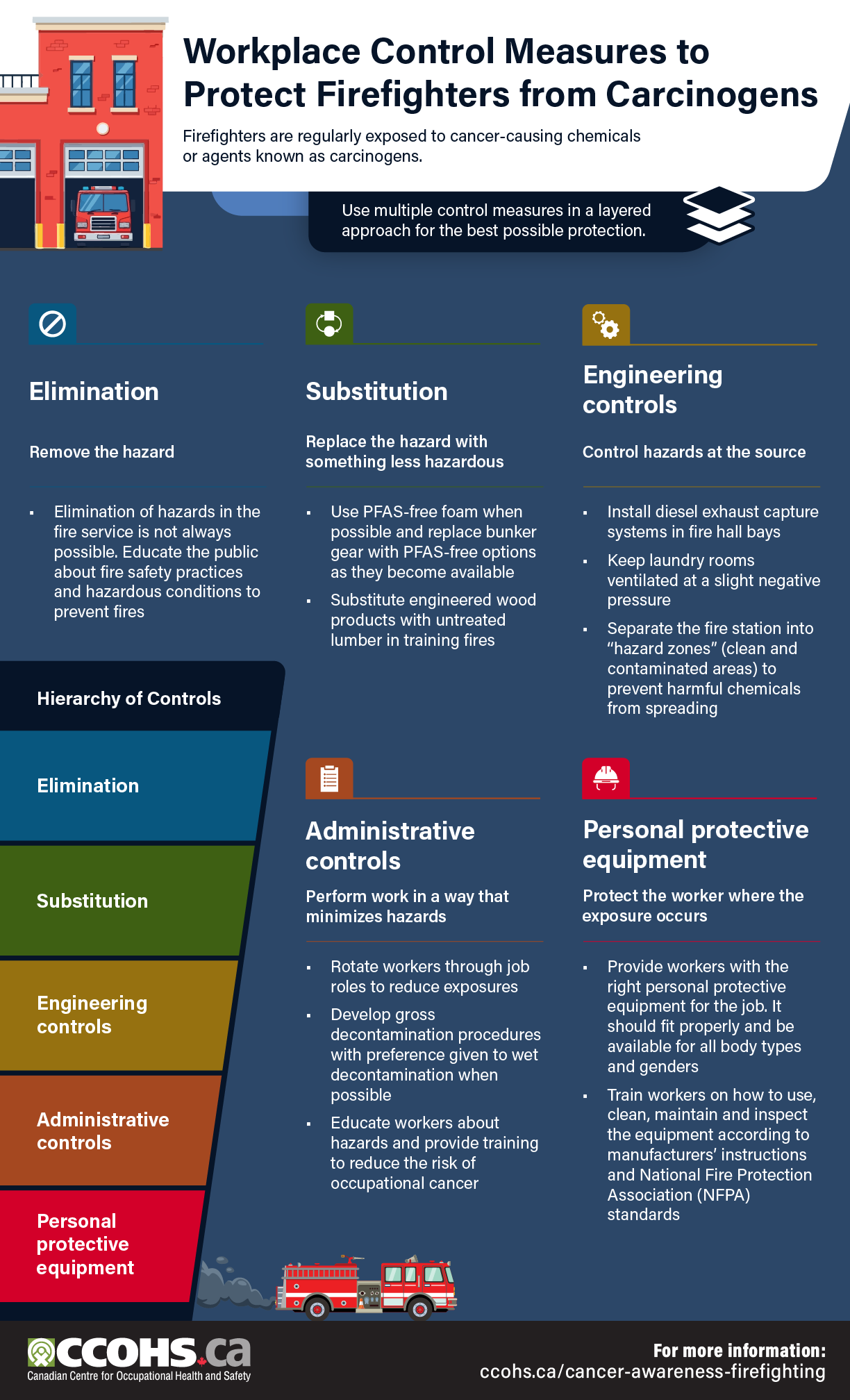
Description: Workplace Control Measures to Protect Firefighters from Carcinogens
Firefighters are regularly exposed to cancer-causing chemicals or agents known as carcinogens.
Use multiple control measures in a layered approach for the best possible protection.
Hierarchy of Controls
- Elimination
- Substitution
- Engineering controls
- Administrative controls
- Personal protective equipment
Elimination
Remove the hazard
- Elimination of hazards in the fire service is not always possible. Educate the public about fire safety practices and hazardous conditions to prevent fires
Substitution
Replace the hazard with something less hazardous
- Use PFAS-free foam when possible and replace bunker gear with PFAS-free options as they become available
- Substitute engineered wood products with untreated lumber in training fires
Engineering controls
Control hazards at the source
- Install diesel exhaust capture systems in fire hall bays
- Keep laundry rooms ventilated at a slight negative pressure
- Separate the fire station into “hazard zones” (clean and contaminated areas) to prevent harmful chemicals from spreading
Administrative controls
Perform work in a way that minimizes hazards
- Rotate workers through job roles to reduce exposures
- Develop gross decontamination procedures with preference given to wet decontamination when possible
- Educate workers about hazards and provide training to reduce the risk of occupational cancer
Personal protective equipment
Protect the worker where the exposure occurs
- Provide workers with the right personal protective equipment for the job. It should fit properly and be available for all body types and genders
- Train workers on how to use, clean, maintain and inspect the equipment according to manufacturers’ instructions and National Fire Protection Association (NFPA) standards
More information: ccohs.ca/cancer-awareness-firefighting
Document last updated on: 2026-03-17